
 Our Location
1st Floor, D2, Shubham Enclave, Paschim Vihar, New Delhi - 110063
 +91- 9310999214
Call for free consultation
What to Eat Before a Dental Appointment: Foods to Choose and Avoid
If you are wondering what to eat before a dental appointment, the good news is that you usually do not need to overthink it. For a routine dental examination or cleaning, most people can eat normally unless their dentist has given different instructions. A simple, balanced meal can help you avoid feeling hungry and make it easier to stay comfortable during the appointment.
For patients visiting a Best dental clinic in Delhi, including Dental Care 'N' Cure, the more useful question is not “Which food is perfect for my dentist?” but “What will leave me feeling comfortable and keep my mouth reasonably clean?” A few sensible choices can help you arrive feeling prepared rather than rushing into the dental chair with an empty stomach and a coffee-induced personality.
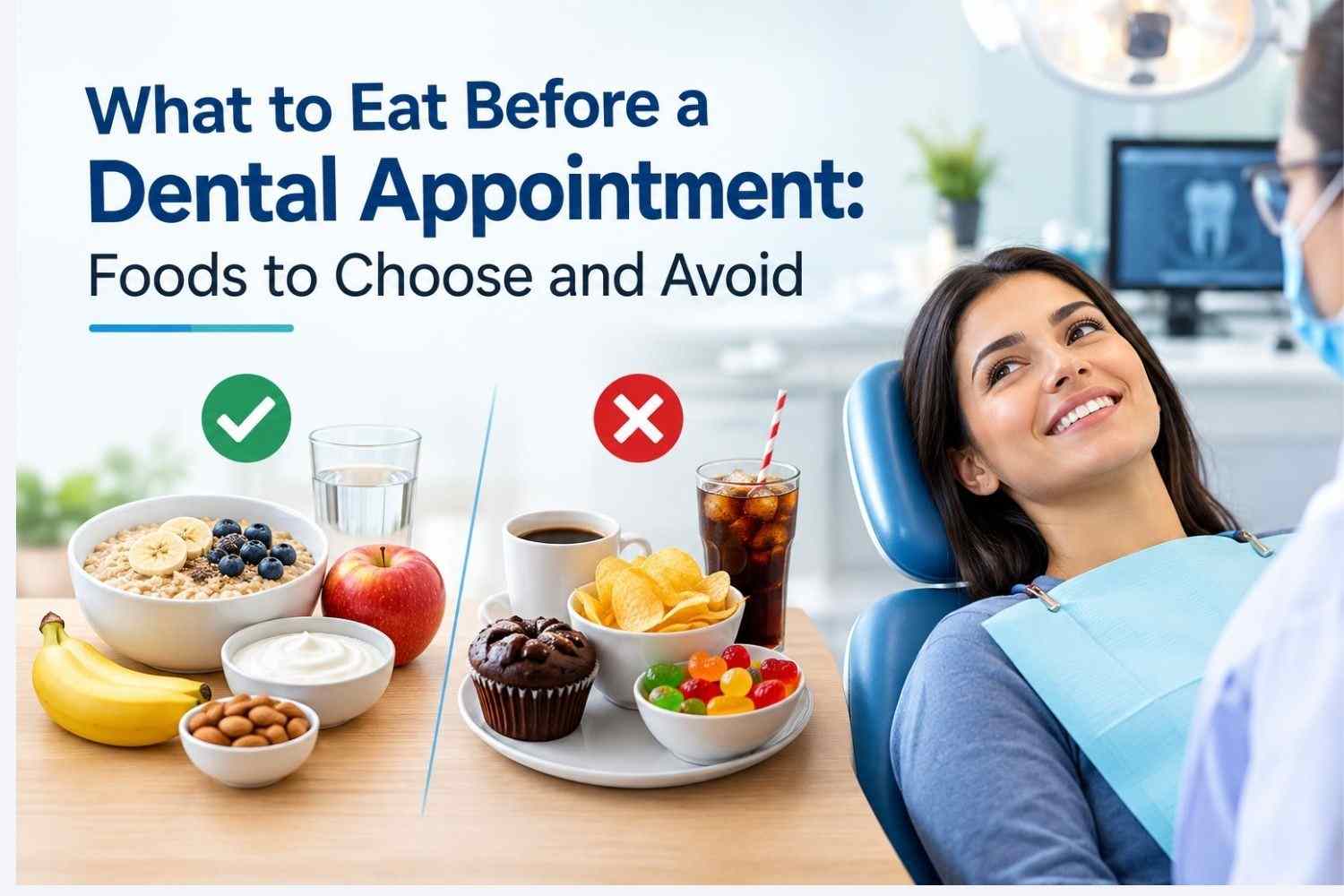
Why Does Food Matter Before a Dental Appointment?
What you eat immediately before a dental visit will not determine the health of your teeth. Your long-term eating habits matter much more.
The American Dental Association (ADA) explains that diet and nutrition affect oral health. Frequent sugar consumption is associated with a higher risk of dental caries, while frequent consumption of acidic foods and drinks can contribute to erosive tooth wear.
That means your pre-appointment meal is a small part of a much bigger picture. Still, choosing sensible food can help you avoid stomach discomfort, maintain energy, and arrive ready for your dental examination, dental cleaning, or other dental procedure.
Also Read: Can You Eat After Getting a Crown?
What Should You Eat Before a Dental Appointment?
For a routine appointment, choose food that you normally tolerate well. You do not need a special “dentist diet.”
Eggs and Other Protein-Rich Foods
Eggs can make a practical breakfast before a morning appointment. They provide protein and can be paired with other foods for a more balanced meal.
Other familiar protein sources can work too. The important point is to choose something filling without relying heavily on sugary foods or drinks.
If your appointment is later in the day, a normal lunch containing a protein source, vegetables, and a suitable carbohydrate can also help you maintain energy during appointment.
Oatmeal and Other Simple Breakfast Options
Oatmeal can be a convenient option before a morning dental visit. If you add sugar, keep the amount modest.
The ADA notes that sugars play an important role in the development of dental caries. The frequency of sugar exposure also matters, so constantly grazing on sweet foods throughout the day is not a great habit for your teeth.
Yogurt
Plain or low-sugar yogurt can be another easy option. It is simple to eat and does not usually leave the same type of sticky residue associated with some sweets.
The ADA also notes that yogurt is not considered erosive despite its acidity, in part because of its calcium content.
Fruits and Vegetables
Fresh fruits and vegetables can fit into a balanced meal. However, not every fruit or drink affects teeth in exactly the same way.
Highly acidic foods and drinks deserve some attention because repeated acid exposure can contribute to dental erosion. The ADA recommends reducing exposure to dietary acids and rinsing with water after acidic foods or drinks rather than brushing immediately afterward.
Water
Water is one of the easiest choices before a dental appointment.
It provides hydration without adding sugar. It can also help clear food and drink residues from the mouth.
If your goal is fresh breath before the dentist or a clean mouth before appointment, drinking water is a straightforward part of your preparation.
Foods and Drinks to Avoid Before the Dentist
You do not have to create a forbidden-food list just because you have a dental appointment. However, some choices are less practical immediately before sitting in the dental chair.
Sugary Foods and Drinks
Candy, sweetened drinks, desserts, and other sugary foods are not ideal choices for oral health.
Sugar itself is not an instant dental emergency, but oral bacteria can metabolize fermentable carbohydrates and produce acids that contribute to tooth demineralization. Frequent sugar exposure increases the concern for dental caries.
So if you have an appointment in an hour, a balanced meal is generally a more sensible choice than a handful of sweets.
Sticky Foods
Sticky foods can leave particles around the teeth and between them. This can make it harder to arrive with a clean mouth before appointment.
If you do eat something sticky, normal oral hygiene can help. Brush with fluoride toothpaste and clean between your teeth according to your usual routine.
Strong-Smelling Foods
Garlic and onions are not automatically “bad” foods for your teeth. The issue is mainly practical: their strong smell can contribute to concerns about bad breath during a close-up dental examination.
If you want to prevent bad breath, good oral hygiene and hydration are more useful than skipping meals.
Heavy or Greasy Meals
A very large meal immediately before treatment may leave you feeling uncomfortable. For some forms of sedation, heavy meals may also be specifically discouraged.
That does not mean you should automatically fast before every dental appointment. Your preparation depends on the type of treatment and sedation being used.
Should You Eat Before a Dental Cleaning?
For a routine dental cleaning or oral examination, you generally do not need to arrive fasting unless your dental team specifically tells you to.
Eating a normal meal beforehand may help you avoid feeling hungry during the appointment. Afterward, brush your teeth and clean between them as part of your normal oral hygiene routine.
There is also no need to scrub your teeth aggressively because you are visiting the dentist. Gentle, thorough brushing with fluoride toothpaste is a better approach for maintaining healthy teeth and gums.
The purpose of a dental cleaning is to professionally remove plaque and tartar that regular brushing cannot fully manage. Your dental hygienist or dentist can also look for signs of gum problems, cavities, or other oral-health concerns.
What If You Are Having Sedation or Anesthesia?
This is the part where general advice about eating before a dental appointment becomes much more important.
If your treatment involves sedation or anesthesia, do not rely on general internet advice about food. Follow the specific instructions provided by your dentist or dental clinic.
The ADA updated its sedation and anesthesia guidelines in 2025, with current guidance incorporating fasting recommendations intended to support patient safety.
Importantly, instructions can differ according to the type of sedation. For example, NHS guidance for inhalation sedation may recommend a light meal before treatment rather than fasting, while IV sedation or general anesthesia can involve substantially different fasting instructions.
So, if you are having a dental procedure involving sedation, ask your dental team:
- When should I stop eating?
- Can I drink water?
- Should I take my regular medicines?
- Does my procedure require fasting?
- What should I do if I accidentally eat or drink outside the instructions?
Following these instructions can help you feel prepared for dental care and reduce unnecessary stress on the day.
A Simple Routine Before Your Dental Visit
Good preparation does not need to become another source of dental anxiety.
- Eat a normal meal if your appointment instructions allow it.
- Choose filling foods rather than excessive sugary snacks.
- Drink water.
- Brush your teeth gently with fluoride toothpaste.
- Clean between your teeth as part of your usual routine.
- Tell your dentist about relevant medicines, allergies, medical conditions, or concerns.
- Follow any special instructions given for your dental treatment.
For a routine appointment, you can keep things simple:
These small steps can help you feel relaxed at the dentist, support oral health, and promote a more comfortable appointment.
What About Coffee Before a Dental Appointment?
Coffee is not automatically off-limits before a routine dental visit. However, if coffee tends to make you feel jittery, anxious, or uncomfortable, you may prefer to limit it before an appointment.
This can be particularly relevant if you already experience dental anxiety. You want to arrive feeling calm, not as though your heart has booked its own appointment.
Also remember that sweetened coffee drinks can contain added sugars, which are relevant to oral health when consumed frequently.
When Should You Ask Your Dentist First?
If you have diabetes, take regular medication, have a condition that affects eating, or are preparing for a procedure involving sedation or anesthesia, ask your dental team for individualized instructions.
The same applies if you are scheduled for more involved treatment such as a tooth extraction, root canal, or Full Mouth Rehabilitation in Delhi. Your preparation should follow the actual treatment plan rather than a generic food list.
A professional dental clinic should be able to tell you whether you can eat normally, need a light meal, or need to follow fasting instructions.
For someone searching for the Best dental clinic in Paschim Vihar, this kind of clear communication can be just as important as knowing what food to put on your plate.
What to Eat Before a Dental Appointment: Key Takeaways
The question of what to eat before a dental visit is typically a simple one. If, for instance, you are going to have just a regular checkup or teeth cleaning and you have not been told to refrain from eating, you can have your usual well-balanced meal of something which you are sure will be okay for your stomach. A well-balanced meal can include different healthy items, such as water, protein sources, whole grains like oatmeal, fresh vegetables, and a selection of low-sugar foods.
Also, it is advisable not to overindulge in sticky treats, sweet beverages or other items that will not be very kind to your stomach. If you know that you will be receiving some anesthesia or sedation through the treatment, you can hardly make the right decision about eating or drinking.
You have to consult a qualified dentist or a dental clinic for advice about particular food and drink you will or will not have during your treatment. Dental Care N Cure can be of help to you explaining what kind of preparation is for your dental treatment. You can talk to the clinic about your appointment and get tips that will be useful for the procedure you have scheduled at your dentist's. Do as your dentist advises, clean your mouth as you always do and bring along whatever you need for the work your dentist will do for you.