
 Our Location
1st Floor, D2, Shubham Enclave, Paschim Vihar, New Delhi - 110063
 +91- 9310999214
Call for free consultation
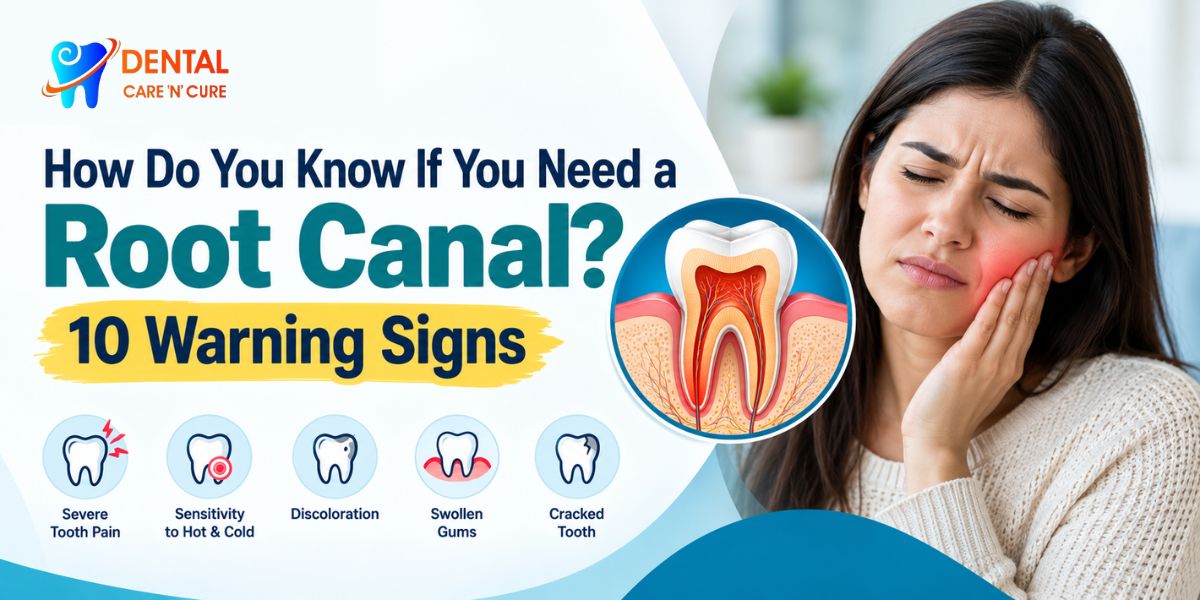
How Do You Know If You Need a Root Canal? 10 Warning Signs
A toothache can be hard to ignore, especially when it starts ruining your meals, keeps you awake at night, or makes you think twice before taking a sip of hot coffee. But how do you know if you need a root canal? Not every painful tooth needs one, and you usually cannot tell from the pain alone.
Some symptoms, however, are worth taking seriously. Persistent tooth pain, sensitivity that lingers after hot or cold food, pain when biting, swelling around the tooth, or a cracked tooth can point to a problem involving the pulp inside the tooth. If you're looking for the Best dental clinic in Delhi, the important thing is not simply finding a clinic that offers Root Canals. You need a proper examination so the actual cause of the problem can be identified.
Dental Care 'N' Cure provides Root Canals along with other dental treatments at its clinic in Paschim Vihar, New Delhi. Its website lists root canal treatment among its dental services.
What Exactly Is a Root Canal?
But, before we ask, how do we know if you need a root canal? There is a great advantage in understanding what is taking place inside the walls of a tooth first of all.
Deep inside an enamel and dentin tooth structure lies the dental pulp. This soft tissue consists of nerves, blood vessels, together with supporting tissue. If at some point the pulp gets severely inflamed or there's an infection, it is likely the doctor to point you to root canal treatment, or endodontic treatment for that matter.
Tooth decay reaching deep layers, cracks, chips, dental injuries, as well as repetitive dental work may all result in the pulp being damaged. Once bacteria can reach the pulp level, untreated conditions of the infection can cause further developments like pulpitis or even a dental abscess.
The idea of a root canal is rather simple: the dentist removes the pulp that is affected by the infection or inflammation, thoroughly cleans the inside of the tooth, and then fills and seals it. The tooth will likely also need a filling or crown so it can keep functioning without pain or infection for years to come.
How Do You Know If You Need a Root Canal?
There isn't one symptom that automatically means, "Yep, that's a root canal." Teeth are a little less cooperative than that.
Still, several root canal symptoms can give you a good reason to book a dental examination.
1. Your Tooth Pain Keeps Coming Back
A mild toothache that disappears quickly may have several causes. But persistent tooth pain or a toothache that keeps returning deserves attention.
You may notice a dull ache, throbbing pain, or even severe tooth pain that makes eating and sleeping difficult. The American Association of Endodontists notes that ongoing tooth pain can be caused by decay, a cracked tooth, or infection and should be evaluated by a dentist or endodontist.
So, if you're asking how do I know if I need a root canal, start with this simple question: Is the pain going away, or does it keep finding its way back?
If it keeps coming back, don't keep testing your luck.
2. Hot or Cold Sensitivity Doesn't Go Away
A quick zing after biting into ice cream isn't necessarily a sign that you need a root canal. Teeth can become temporarily sensitive for several reasons.
The more concerning pattern is lingering tooth sensitivity. If hot coffee, cold water, or ice cream causes pain that continues after you've stopped eating or drinking, the pulp may be irritated or damaged. The AAE specifically identifies lingering sensitivity to hot or cold as a symptom that can be associated with pulp damage.
This is one of the more useful signs you need a root canal to know about, but it still needs professional diagnosis.
3. Biting Down Hurts
Does one particular tooth hurt when you bite into something?
Pain when biting or chewing can happen with tooth decay, a loose filling, a cracked tooth, or damage to the pulp. A sharp jolt when you bite down is particularly worth checking rather than simply avoiding that side of your mouth.
A dentist can examine the tooth and work out whether the pain is coming from the pulp, the tooth structure, the surrounding tissues, or another dental problem.
4. Your Gum Is Swollen or Tender
Swollen gums or gum tenderness around a particular tooth can sometimes accompany a dental infection.
You might also notice a small pimple or bump on the gum. In some cases, an infected tooth can lead to an abscess, which is a collection of pus associated with infection.
Other possible symptoms include facial swelling or jaw swelling. These aren't symptoms to ignore, particularly when they appear with tooth pain or fever.
5. The Tooth Is Cracked, Chipped, or Darker
A cracked or damaged tooth doesn't automatically mean you'll need a root canal. However, a crack can allow bacteria to reach the deeper parts of the tooth and may damage the pulp.
A tooth can also develop a darker appearance after certain types of injury or internal damage. That's another reason to have it checked rather than assuming it's simply a cosmetic issue.
The AAE lists cracked or chipped teeth and tooth darkening among signs that can occur when the pulp is affected.
What Causes a Tooth Infection?
Now that you know the common warning signs, you may be wondering what actually causes the problem.
A tooth infection can develop when bacteria reach the pulp. This can happen because of:
- Deep tooth decay
- A cracked or chipped tooth
- Dental trauma
- Repeated dental procedures
- Problems with an existing restoration
- An untreated dental abscess
The pulp may become inflamed, a condition commonly described as pulpitis. If the damage becomes irreversible or the pulp becomes infected, root canal treatment may be needed.
This is why treating a cavity early is usually much easier than waiting until the problem reaches the tooth nerve.
How Does a Dentist Know If You Need a Root Canal?
This is the part where Google and your guesswork need to step aside.
A dentist doesn't decide on a root canal simply because you say your tooth hurts. During a root canal diagnosis, the dentist considers your symptoms, examines the tooth, and may perform tests to check how the tooth responds. A dental X-ray may also be used to look at the tooth and surrounding structures.
The dentist is looking for clues such as deep decay, damage to the tooth, signs of infection, or problems around the root.
Sometimes an endodontist, a specialist who deals with the dental pulp and tissues around the roots of teeth, may be involved. The goal isn't to recommend a root canal simply because it's available. The goal is to find out what's actually wrong and choose the right treatment.
That's the most reliable answer to how do you know you need a root canal: symptoms can raise suspicion, but a proper dental examination confirms the diagnosis.
Also Read: How to Choose the Best Dental Clinic for International Patients Traveling Abroad
Root Canal or Tooth Extraction?
When someone hears "root canal," another thought often follows immediately: Wouldn't it be easier just to pull the tooth?
Not necessarily.
A root canal is designed to treat the inside of an infected or inflamed tooth while allowing the natural tooth to remain in place. After the treatment, the tooth is restored so it can continue functioning. Depending on the condition of the tooth, a crown may be needed for additional protection.
Root canal vs extraction is therefore not a decision you should make based on pain or fear of treatment. The condition of the tooth matters. In some situations, a tooth can be saved; in others, extraction may be the more appropriate option.
There can also be alternatives to root canal treatment when the pulp isn't irreversibly damaged. For example, a dentist may recommend a filling or another restoration when that is enough to solve the underlying problem.
What Happens During Root Canal Treatment?
The name sounds more dramatic than the basic idea.
During root canal treatment, the dentist uses local anesthesia to numb the area. The infected or inflamed pulp is removed, the inside of the tooth is cleaned and shaped, and the space is filled and sealed. The tooth may then need a crown or another restoration depending on how much structure remains.
The aim is to remove the source of infection while preserving the natural tooth.
Dental Care 'N' Cure lists Root Canals as one of its services and describes endodontic treatment as a way of treating inflammation or infection inside the tooth.
When Should You See a Dentist?
If you have tooth pain that won't go away, lingering sensitivity, pain when biting, swollen gums, a cracked tooth, or other tooth infection symptoms, don't wait indefinitely to see whether things improve.
A dental abscess deserves particular attention. If you develop significant facial swelling, fever, or feel generally unwell along with a dental problem, seek prompt dental or medical care.
And don't rely on antibiotics as a substitute for treating the tooth itself. The underlying dental problem still needs appropriate professional care.
If you're considering the best dental clinic, look for a clinic where the dentist explains the diagnosis and treatment choices clearly rather than simply jumping straight to a procedure.
What About Full Mouth Rehabilitation?
Not every patient who needs a root canal needs a much larger treatment plan.
However, people with several damaged, missing, heavily restored, or otherwise compromised teeth may need broader restorative planning. In those situations, treatments can sometimes include crowns, bridges, implants, orthodontic care, gum treatment, or Root Canals as part of a larger plan.
For patients searching for Full Mouth Rehabilitation in Punjabi Bagh, the first step should still be a proper examination. The treatment plan should be based on the condition of the teeth and gums, not on a standard package of procedures.
Dental Care 'N' Cure also provides a range of dental services alongside Root Canals, allowing treatment needs to be assessed more broadly when necessary.
How Do You Know If You Need a Root Canal? Key Takeaways
So what are the signs you might need a root canal? Watch for the pattern, not just one isolated sign or symptom.
Watch for:
- Chronic tooth pain or extreme pain in a single tooth
- Persistent hot and cold sensitivity
- Pain on biting and chewing
- Swollen or tender gums
- A dental abscess or pimple on the gum
- A cracked, chipped, or darkened tooth
But here's the crux of the matter: you can't diagnose the need for a root canal based on symptoms alone.
The dentist needs to look at the tooth and, if necessary, use dental radiographs and other tests to investigate what is going on within the tooth.
Occasionally, the tooth requires root canal therapy; in some cases, it would need a filling, crown or another procedure, and in other instances, removal is the best course of action.
While these are the common symptoms linked to a root canal, if you're experiencing any of these, don't ignore them. Call Dental Care 'N' Cure today and schedule a dental consultation to determine if you require a root canal treatment or something else.