
 Our Location
1st Floor, D2, Shubham Enclave, Paschim Vihar, New Delhi - 110063
 +91- 9310999214
Call for free consultation
Why Bone Health Matters Before Getting Dental Implants
If you are considering dental implants, the conversation should not start and end with the replacement tooth. The foundation underneath it matters just as much. Bone health for dental implants plays an important role in determining whether an implant has enough support for proper placement and healing. If you are exploring Dental Implant treatment in Paschim Vihar, a thorough dental examination should include an assessment of the jawbone, gums, and surrounding structures before treatment begins.
At Dental Care 'N' Cure, understanding the condition of the supporting structures is an important part of making implant treatment more informed and predictable. After all, putting a beautiful dental crown on an unstable foundation is a little like placing a fancy roof on a house that has forgotten to build the walls.
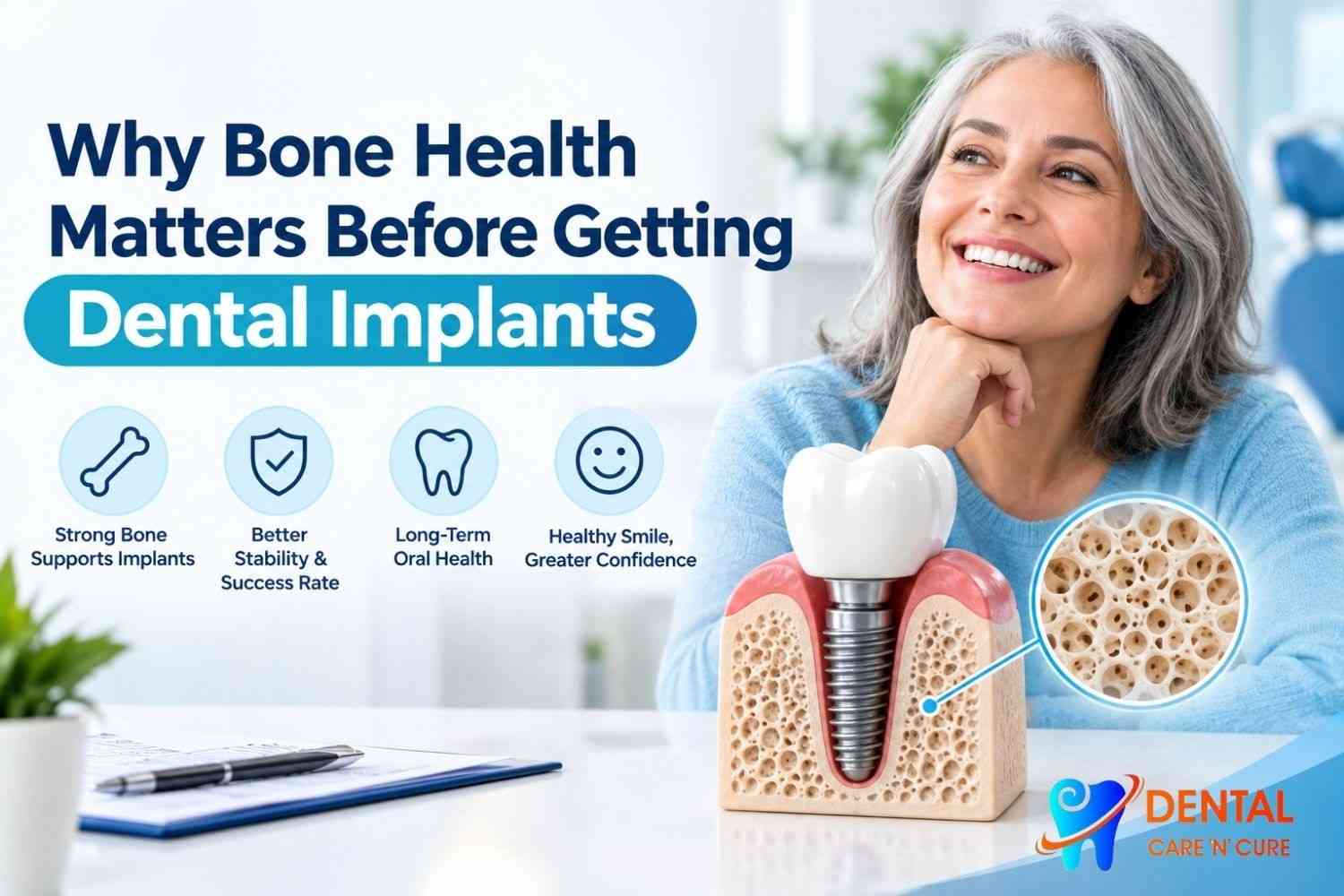
Why Does Bone Health Matter for Dental Implants?
A dental implant acts much like an artificial tooth root. During implant placement, the implant sits inside the jawbone and eventually undergoes a biological process called osseointegration, in which bone forms a close connection with the implant surface.
That connection is important for dental implant stability. The available bone volume, jawbone density, and overall jawbone quality can therefore influence treatment planning and the way an implant is supported.
According to Cleveland Clinic, there needs to be enough healthy jawbone to support a dental implant. When there is insufficient bone, a dental bone graft may be considered to build up an area before implant treatment.
This does not mean that having some bone loss automatically rules out implants. It means your dentist needs to understand the condition of the area before deciding how to proceed.
What Happens to the Jawbone After Tooth Loss?
When a tooth is lost, the bone that once supported its root no longer receives the same stimulation. Over time, bone resorption can reduce the available bone in the area. Tooth loss and bone loss can therefore become connected problems rather than completely separate ones.
The alveolar bone surrounds and supports the teeth. When a tooth is removed, changes can occur in the surrounding alveolar ridge. The extent of these changes varies between individuals and depends on several factors.
This is one reason bone preservation after tooth extraction can matter when an implant may be considered later. A dentist may evaluate the extraction site and determine whether preserving or rebuilding the area is appropriate.
Cleveland Clinic notes that dental bone grafting can help increase jawbone volume and density and may be used after tooth extraction or when bone loss affects implant treatment.
How Is Bone Health Checked Before Implant Placement?
Before recommending treatment, a dentist or implant specialist needs to understand what is happening beneath the gums. Looking only at the visible teeth does not provide the complete picture.
A dental implant consultation commonly includes a dental examination and appropriate dental imaging. Depending on the individual case, this may involve a panoramic X-ray or other imaging techniques.
A CBCT scan for dental implants can provide three-dimensional information about the teeth, jaws, and surrounding anatomical structures. The FDA explains that dental cone-beam CT can create 3D images and is used in dentistry for applications including dental implant planning. It also recommends that CBCT should be used when necessary to provide clinical information that other imaging cannot adequately provide.
This type of 3D dental imaging can help with bone assessment and implant treatment planning. It may allow the dental team to evaluate the available ridge and identify important anatomical structures before deciding where and how an implant should be placed.
Also Read: How Do You Know If You Need a Root Canal?
What If There Isn't Enough Bone?
Insufficient bone does not always mean the end of your dental implant journey. In some cases, the dental team may recommend bone augmentation before implant placement.
A dental bone graft adds grafting material to an area where bone has been lost or become too thin. The purpose is to help increase the available bone volume and create a more suitable foundation for future treatment.
Cleveland Clinic describes dental bone grafting as a procedure that can increase the width and volume of the jawbone and provide support for dental implants.
The exact approach depends on the location and amount of bone loss. Some patients may require ridge augmentation, while certain cases involving the upper jaw may require a sinus-related procedure. Not everyone needs grafting, and the decision should follow an individual clinical assessment.
Bone Quality Matters, Not Just Bone Quantity
It is easy to think of implant preparation as a simple question: “Is there enough bone?”
In reality, the situation can be more nuanced. The quality and density of the available bone also form part of implant treatment planning. The FDA's dental implant guidance includes assessment of the density of bone at the intended implant site and radiographic evaluation of the supporting ridge.
This is why a healthy jawbone is valuable during implant treatment. The goal is not simply to find an empty space and place a titanium implant inside it. The dentist must consider the surrounding anatomy, available bone, implant position, bite, and restorative requirements.
The American Association of Oral and Maxillofacial Surgeons also highlights the importance of bone volume and quality at the bone-implant interface when considering implant function and treatment planning.
Does Bone Health Affect Implant Healing?
Yes, because an implant needs time to integrate with the surrounding bone.
During osseointegration, the bone gradually establishes a connection with the implant. Cleveland Clinic describes this healing phase as critical for implant stability and long-term function.
That is why rushing treatment is rarely useful. Your dental team may recommend allowing adequate healing after extraction or bone grafting before proceeding with the next stage.
Factors such as untreated gum disease, smoking, poor oral hygiene, certain medical conditions, and significant bone loss can also affect implant treatment considerations. The FDA lists infection, untreated periodontal disease, delayed healing, and other complications among issues that can affect dental implant outcomes.
If you have concerns about implant failure, ask your dentist what they see on your examination and imaging rather than relying on assumptions from someone else's experience. Your mouth has its own history.
Can Healthy Bone Improve Your Implant Experience?
A suitable foundation can make implant treatment planning more straightforward, but every patient's situation is different. The objective is to create a treatment plan based on the actual condition of your mouth rather than a standard formula.
For someone considering dental Implant treatment, a detailed assessment can help identify whether immediate implant placement is appropriate or whether additional treatment should come first.
At Dental Care 'N' Cure, patients can discuss their concerns during the consultation and understand the factors that may influence their treatment. Depending on the clinical findings, the discussion may include implant placement, bone grafting, imaging, healing requirements, or alternatives.
If you are also researching Guided Dental Implant Surgery in Delhi, remember that technology supports clinical decision-making; it does not replace it. The right approach still begins with proper examination, diagnosis, and treatment planning.
What Should You Ask Before Getting Dental Implants?
A useful consultation should leave you with clear answers, not a head full of dental vocabulary.
- Do I have enough bone volume for implant placement?
- What is the condition of my jawbone density and quality?
- Do I need a CBCT scan or another type of imaging?
- Is bone grafting necessary in my case?
- Do I have gum disease or another issue that should be treated first?
- How long might healing and osseointegration take?
- What type of restoration, such as a dental crown, will be attached to the implant?
Consider asking:
These questions can give you more confidence in dental implants and greater peace of mind because you understand why a particular treatment plan has been recommended.
Ready to Take the Next Step Toward Dental Implants?
A healthy foundation is an important part of successful dental implant treatment. If you are unsure whether your jawbone can support an implant, the best place to start is with a professional evaluation rather than guesswork.
Dental Care 'N' Cure can help you understand your current oral health, available treatment options, and whether further assessment or bone-related treatment may be needed before implant placement.
If you are considering dental implant treatment, contact Dental Care 'N' Cure to schedule a consultation and discuss your dental implant needs with a professional dental team.
Contact Dental Care 'N' Cure today and take the first step toward a properly planned dental implant treatment.